Episode 2: Architectural Judgment - Why Code Placement Matters More Than Code Quality
You've done your homework. You read the legacy NetSuite code carefully, understood the context, and wrote a perfectly correct validation function.
Then you ship it, and everything breaks.
Not because your logic was wrong. But because you put it in the wrong place.
This is where architectural judgment separates developers who maintain systems from those who accidentally destabilize them. Let's talk about how placement decisions shape NetSuite code stability.
The "Correct Code, Wrong Location" Problem
Here's a scenario we see constantly: A developer needs to validate vendor payment terms before processing.
The logic itself is solid:
JavaScript
function validatePaymentTerms(vendor) {
if (!vendor.terms || vendor.terms === 'Net 0') {
throw new Error('Invalid payment terms');
}
}
Perfect validation. Clear logic. No bugs.
But where does it go?
Common placement mistakes:
- Deep inside a transaction processing loop
- In a User Event that runs on every field change
- Inside a scheduled script that processes 1,000 records
- Within a CSV import routine that vendors use daily
Each location takes the same correct code and creates completely different failure patterns.

Why Placement Decisions Are Architecture Decisions
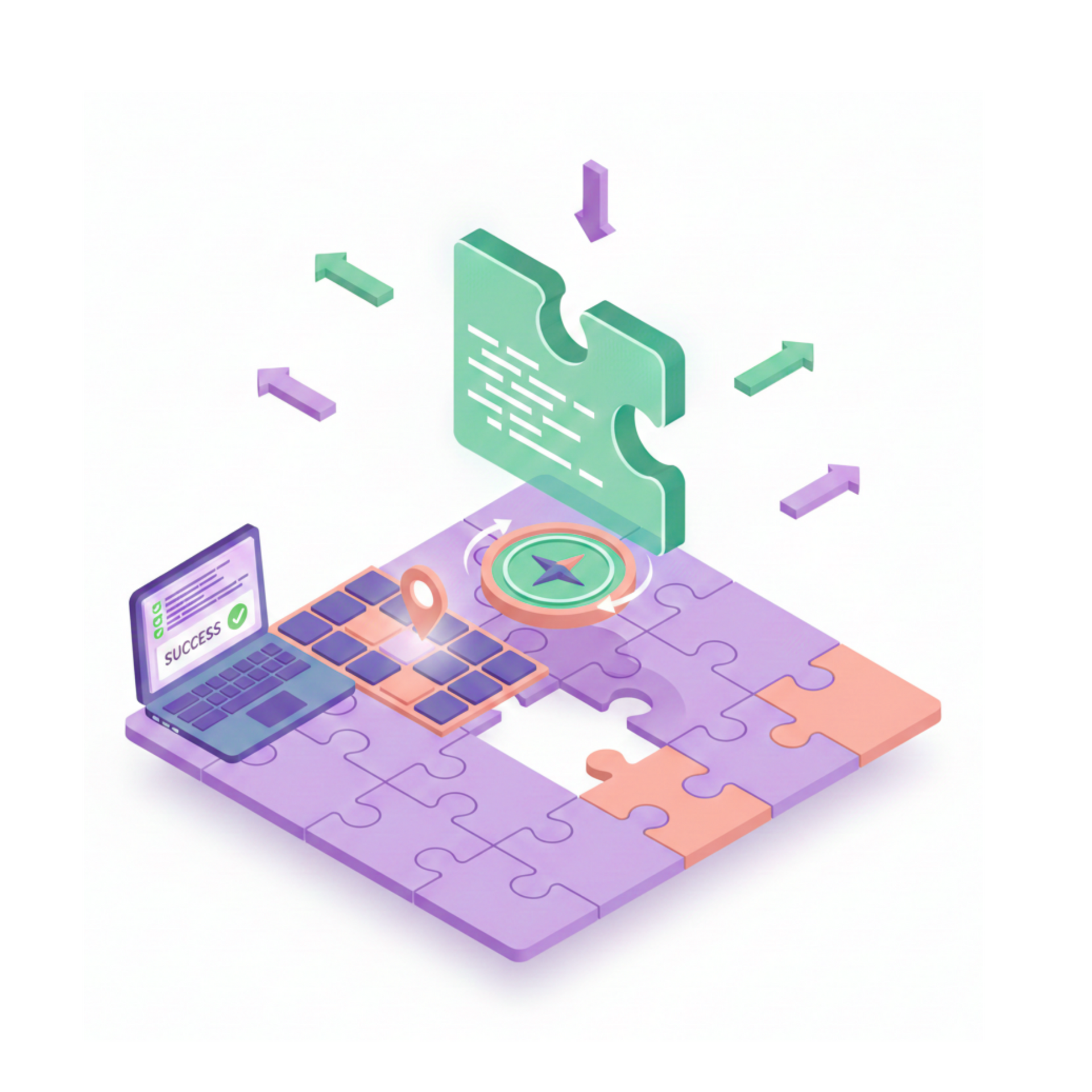
When you choose where code lives in NetSuite, you're really deciding much more than file organization.
Architectural judgment means understanding what you're actually controlling when you place code in a specific location.
| Decision Factor | Impact on System |
|---|---|
| Execution context | Determines when validation runs |
| Error visibility | Affects who sees failures and how |
| Performance cost | Changes system load patterns |
| Recovery options | Limits or enable rollback paths |
The best validation logic becomes a production incident when placed where it runs 10,000 times during a nightly batch process instead of once during manual entry.
Real Example: The Validation That Broke Imports
A team needed to prevent duplicate vendor records. They wrote clean validation logic and added it to beforeSubmit on the Vendor record User Event.
The validation worked perfectly during manual entry.
Then it broke every CSV import vendors relied on for weekly updates.
The architectural mismatch:
- Manual entry: 1 record at a time, user gets immediate feedback
- CSV import: 500 records, fails silently on row 247
- No error visibility for vendors
- No way to recover without custom error handling
The validation wasn't wrong. The placement was.
This is what happens when functional requirements are met but architectural judgment is missing.

Three Questions for Architectural Judgment
Before placing any NetSuite code, we need to answer three critical questions that shape system behavior.
1. What triggers this code path?
User actions and system processes hit the same scripts differently.
Code placed in User Events runs during:
- Manual record saves
- CSV imports
- Web service calls
- Workflow updates
- Mass updates

Architectural judgment means knowing which contexts need your logic and which need to bypass it. Every placement decision is really a decision about which execution contexts should trigger your code.

2. What happens when this fails?
Failure behavior depends entirely on placement, not on the quality of your error handling.
Client Script failure:
- User sees error immediately
- No database changes occur
- Easy recovery path
User Event failure:
- Transaction rolls back automatically
- May affect related records
- Error visibility varies by context
Scheduled Script failure:
- Batch continues or stops depending on error handling
- Error buried in logs
- Recovery requires manual intervention
Choose placement based on acceptable failure modes, not just functional requirements.
This is architectural judgment in practice.
3. Who pays the performance cost?
A validation that runs in 50ms seems fine. But placement determines how often it actually runs.
| Script Type | Unit Cost | At Scale |
|---|---|---|
| Client Script | 0 units (runs in browser) | 0 units |
| User Event | 10 units per record | 10 units |
| Map/Reduce | 10 units per record | 100,000 units (10k records) |

Architectural judgment includes understanding computational cost at scale, not just whether code works correctly in isolation.
Patterns for Better Placement Decisions
Let's talk about where different types of code actually belong in NetSuite architecture.
Use Client Scripts for User-Facing Validations
Place interactive validations where users work, before they submit anything to the server.
Good for:
- Field format checks
- Required field enforcement
- Basic business rule validation
Not good for:
- Complex data lookups
- Calculations requiring server data
- Anything that needs to run during automation


Use User Events for Transaction Integrity
Place business logic that must stay consistent with database state here.
Good for:
- Cross-record validations
- Audit trail requirements
- Related record updates
Not good for:
- Long-running operations
- External API calls
- Anything that might timeout
Use Scheduled Scripts for Heavy Processing
Place resource-intensive operations where governance isn't per-transaction.
Good for:
- Batch updates
- Report generation
- Data cleanup operations
Not good for:
- Real-time validations
- User-triggered logic
- Anything requiring immediate feedback


The Core Principle Behind Architectural Judgment
Here's what we've learned: Code correctness isn't absolute. It's contextual.
The same validation that's perfect in a Client Script becomes a production incident in a Scheduled Script processing thousands of records.
Before writing any NetSuite code, decide where it needs to live. That decision determines everything about how it behaves, fails, and scales.
The mental model:
- Understand what you're building (functional requirement)
- Understand where it needs to live (architectural requirement)
- Understand the constraints of that location (technical requirement)
When these three align, code stays stable.
When they don't, correct logic creates incorrect outcomes.
Architectural judgment is the skill of aligning these three layers before you write a single line of code.
What's Next
In our next piece, we'll explore data flow patterns in NetSuite. We'll look at how information moves through your system and why understanding those paths prevents the cascading failures that turn small changes into major incidents.
Understanding data flow is the next layer of architectural judgment that keeps NetSuite implementations stable.
Let's talk about your NetSuite development challenges. ATSOURCE helps development teams build architectural judgment through practical training and code review processes that catch placement issues before they reach production.
Contact us to learn how we support teams building stable, scalable NetSuite implementations.

Meet the Author
Jona has over a decade of experience in SuiteCloud Development on the NetSuite platform. She specializes in implementing advanced solutions and has led teams in creating high-quality software. Jona holds multiple certifications and has been recognized with awards like the Summit Award and Quality Champion Award.
Tags
Accelerate ERP Success with Expert Solutions
Ready to put what you've learned into practice? ATSOURCE delivers both the specialized talent and comprehensive NetSuite support you need to turn strategy into results.Connect with our experts today and move from planning to performance.