
Episode 5: Coupling Is a Hidden Tax: The Dependencies You Don't See Will Hurt You
You've mapped the data flow. You've accounted for execution context. But your NetSuite system still feels fragile — and nobody can explain why.
The answer is usually coupling. Not the obvious kind. The invisible kind, where a User Event silently assumes a field was already set by another script, a Scheduled Script expects a workflow to have run first, or a Map/Reduce relies on a status flag updated "somewhere else." And nobody documented any of it.
That's the hidden tax in NetSuite systems. It accumulates quietly, and you only notice it when something breaks.
Why Coupling Makes Systems Brittle
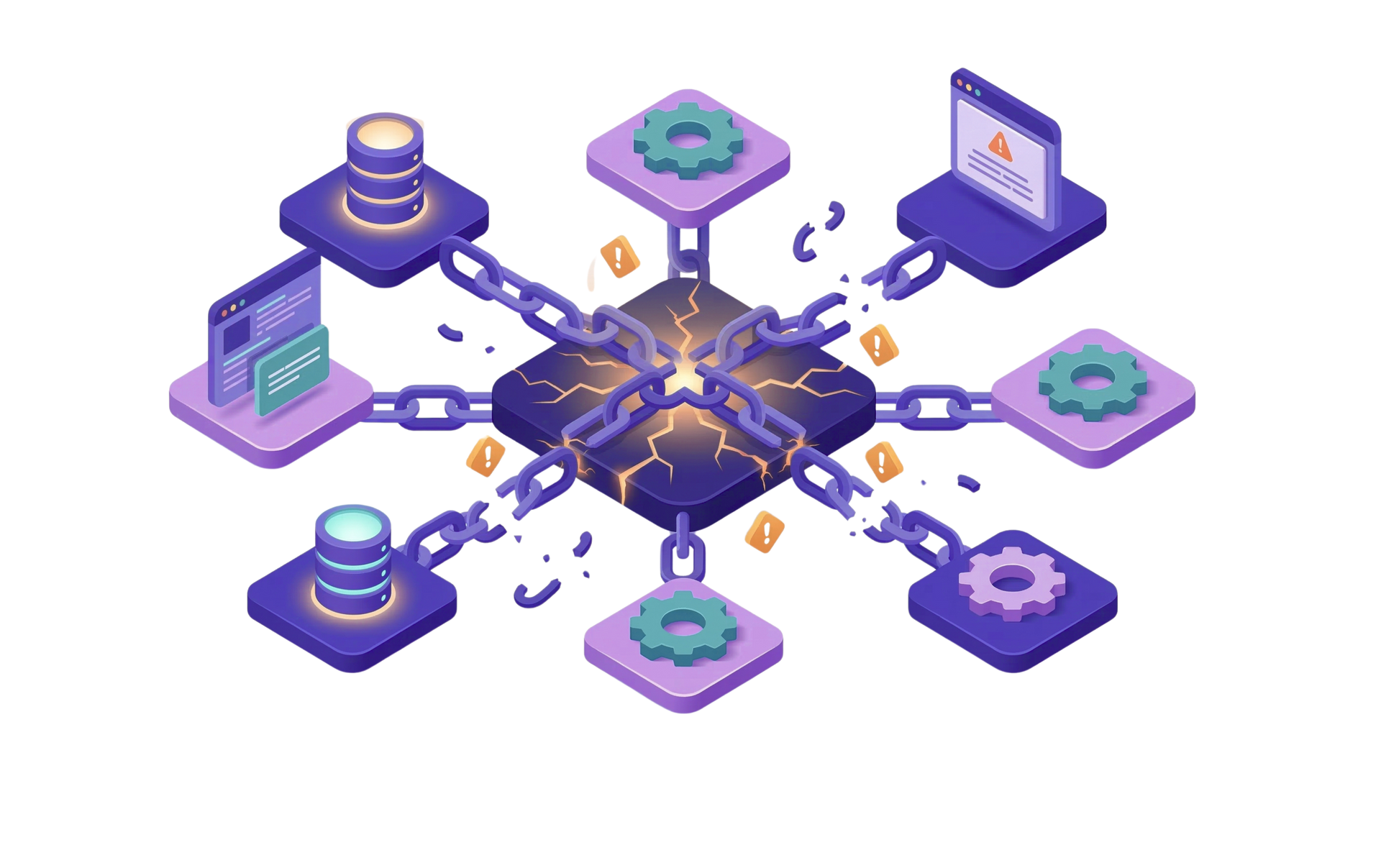
Here's a lesson learned the hard way. Early in my NetSuite years, I modified what looked like a harmless User Event. Small enhancement. One extra condition. Tests passed. QA looked fine. Deployment felt safe.
Production said otherwise.
It turned out another User Event depended on a field being set earlier in the execution order, a Scheduled Script assumed a certain status transition, and a Workflow reacted to the same update. My "tiny change" disrupted a chain I didn't even know existed.
Nothing was technically wrong. But everything was tightly coupled. In NetSuite, scripts don't fail alone — they fail together.
This is why coupling becomes cultural debt, not just technical debt:
- Refactoring feels scary because dependencies are invisible.
- Engineers avoid touching legacy code because consequences are unpredictable.
- "Let's not modify that" becomes a team norm instead of a conscious architectural choice.
When fear drives decisions, architecture has already failed.
How to Reduce Coupling Intentionally
Let's look at four practical approaches to untangling hidden dependencies.
1. Stop Letting Entry Points Contain Business Logic
One of the biggest coupling traps is putting core logic directly inside beforeSubmit, afterSubmit, or Map/Reduce entry points. When that happens, every script touching that record becomes implicitly dependent.
| Instead of This | Do This | Why It Matters |
|---|---|---|
| Business rules inside script entry points | Extract domain logic into reusable modules | Logic becomes and portable |
| Script files handling routing and rules | Keep entry points thin - orchestrate, don't own | Reduces hidden dependencies |
| Implicit dependencies between scripts | Make all dependecies explicit | Changes become predictable |
Transport should orchestrate behavior, not own it.
2. Make Cross-Record Updates Intentional
If a script updates another record type, let's ask three questions before moving forward:
- Is this update necessary here, or should it live elsewhere?
- Is there a clearer orchestration layer for this relationship?
- Should this be event-driven or service-driven?
Implicit cross-record updates create hidden webs. When relationships are explicit, systems feel stable. When they're implicit, systems feel haunted.

3. Design for Replaceability

Here's a simple test: "If I remove this script tomorrow, what breaks?"
If the answer is "I'm not sure," that's coupling. Scripts that rely on field states set by others, execution order assumptions, or side effects instead of explicit calls are building interdependence without contracts. Contracts create stability. Assumptions create fragility.
4. Refactor With Awareness, Not Fear
Coming from QA for seven years before fully stepping into engineering, I learned something valuable: most production issues aren't caused by bold refactors. They're caused by unclear relationships.
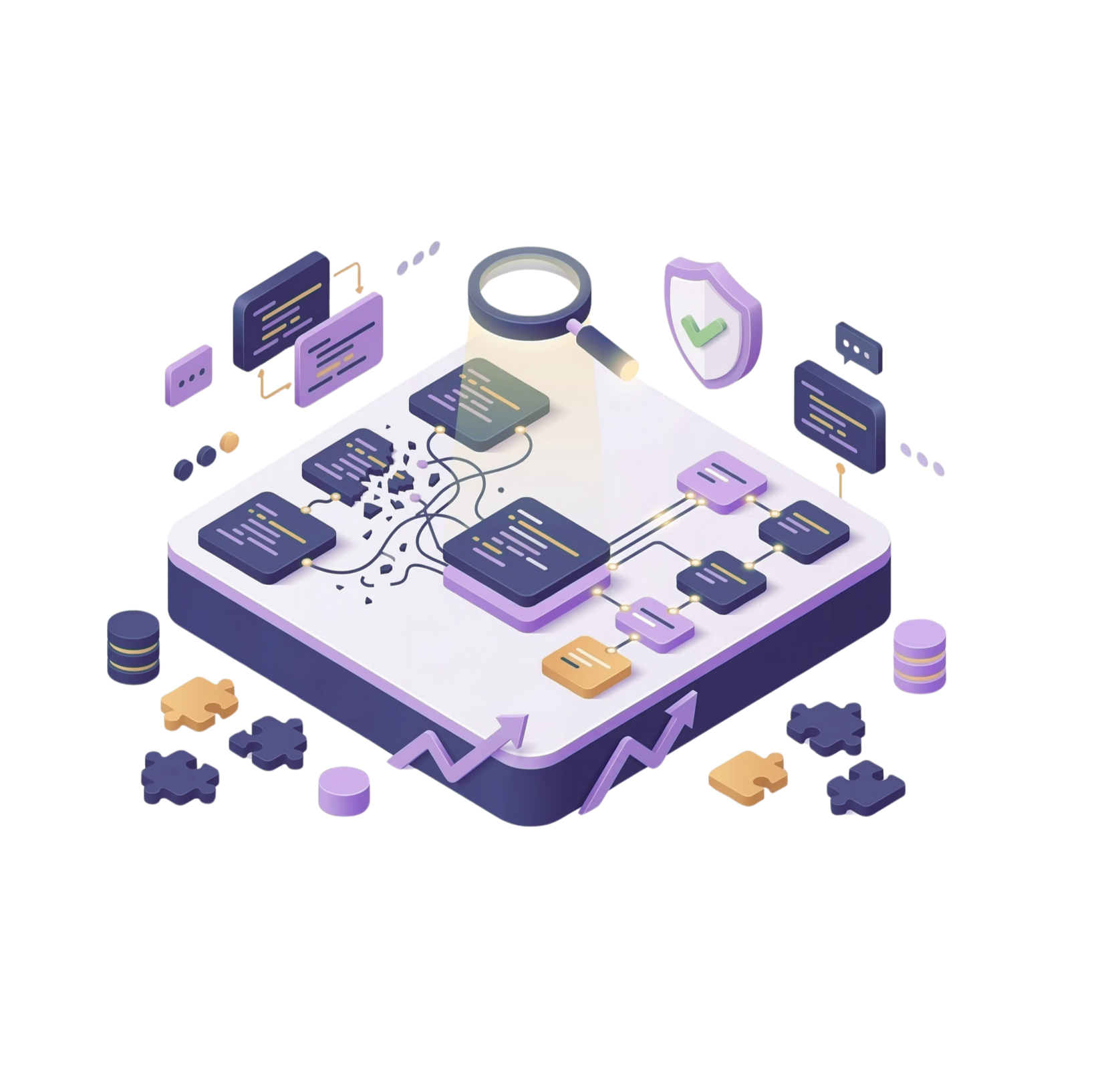
When you understand the dependency graph, refactoring becomes calculated. When you don't, every change feels risky. Architectural judgment isn't just about writing better code — it's about making systems safe to evolve.

The Mental Model
Think of your NetSuite implementation like a set of connected rooms. Loose coupling means you can renovate one room without shaking the entire building. Tight coupling means changing a light bulb causes the kitchen ceiling to collapse.
Data flow tells us how changes propagate. Context tells us how behavior shifts. Coupling tells us how safely the system can change. If engineers are afraid to touch parts of the system, coupling is too high. If changes feel predictable, coupling is under control.
Build With Confidence
Reducing coupling takes more than awareness — it takes deliberate architectural decisions and teams who know where hidden dependencies live. At ATSOURCE, we help NetSuite development teams untangle tightly coupled systems and build codebases that are safe to evolve.
Let's talk
about making your next refactor feel predictable instead of risky.

Meet the Author
Jona has over a decade of experience in SuiteCloud Development on the NetSuite platform. She specializes in implementing advanced solutions and has led teams in creating high-quality software. Jona holds multiple certifications and has been recognized with awards like the Summit Award and Quality Champion Award.
Tags
Accelerate ERP Success with Expert Solutions
Ready to put what you've learned into practice? ATSOURCE delivers both the specialized talent and comprehensive NetSuite support you need to turn strategy into results.Connect with our experts today and move from planning to performance.